
Annotated Bibliography and Reflection

Annotated Bibliography
Benjamin, Walter. “The Work of Art in the Age of Mechanical Reproduction.” Illuminations, edited by Hannah Arendt, translated by Harry Zohn, Schoken Books, 1968, pp. 217-252.
This seminal essay from the eminent aesthetician of the 20th century, Walter Benjamin, outlines the new realities of the existence of artwork in the era of “mechanical reproduction.” With the advent of photography and the ability of technology to produce apparent facsimiles of existing artworks, Benjamin notes that the place of art in the public imagination is evolving. In particular, the aura of the piece degrades as a result of its depreciated uniqueness. He also notes that art can be appreciated in terms of its “cult” value or its “exhibitional” value — and that in the museum (and capitalistic) context, exhibitional value has a vastly more significant weight than the cult value. This finding leads to crucial observations on the changing position of art observers and their relationship to art — less spiritual, more economic.
Berger, John. Ways of Seeing. British Broadcasting Corporation and Penguin Books, 1972.
Based on a four-part television series produced by the BBC in 1972, John Berger’s book Ways of Seeing is a collection of seven essays (four textual, three strictly imagistic) that reveal hidden elements lying behind paintings that condition our approach to arts. This collection of essays is intended to deconstruct popular assumptions or misconceptions about the public’s relationship to art. In particular, the essays take up questions regarding issues of the persistence (or lack thereof) of the significance of a work’s original context; the male gaze, and its impact on the production of female nudes; art related to a piece’s commissioner/subject as a means of projecting status; and the connection between publicity/modern advertising to art history. Naturally, Berger draws on a Marxist approach to art, deeply concerned with the historically material circumstances underlying any given aesthetic object.
Beshty, Walead. “Los Angeles.” Artforum 47, December 2008, https://www.artforum.com/features/walead-beshty-217066/. Accessed 24 February 2025.
This short feature from the magazine Artforum in 2008 details the strange position that Los Angeles occupies as a hub for art. As the undisputed world capital of film and television, LA mixes reality and representation at a level perhaps unrivaled among all other global cities. Beshty meditates on this factor, noting that this circumstance appears to heavily influence the operations of the Angeleno art market — and its particular penchant for materializing art. Beshty also provides a reconstruction of the portrayal/characterization of Los Angeles as an apocalyptic space, a wasteland, or (as Brecht puts it more succinctly) as “Hell.” He evaluates how this aspect of LA impacts its artists and collectors. This evaluation is done in conjunction with reference to a retrospectacle by Takashi Murakami and its reflection of these issues.
Carrier, David. “The Art Museum Today.” Curator, vol. 54, no. 2, 2011, pp. 181–89, https://doi.org/10.1111/j.2151-6952.2011.00080.x. Accessed 26 February 2025.
This short article by David Carrier, art philosopher and academic, illustrates a gaping hole in the field of art literature. While plenty of work has been done to develop theory of artistic interpretation or art history, comparatively little has been written about the process of creating museum installations — a demonstrably important aspect of viewers’ engagement with objects. Carrier illustrates the importance of museum interior stylizing, from Washington D.C. to Beijing, and notes how even decisions as simple as a painting’s frame can dramatically impact a viewer’s interpretation or engagement with an object.
“Christopher Knight: The Critic Whose Love for LA Uplifted Its Arts Community.” Hyperallergic’s Podcast from Hyperallergic, 19 June 2020, https://hyperallergic.com/572069/christopher-knight-the-critic-whose-love-for-la-uplifted-its-arts-community/.
This interview with the most prominent art critic in Los Angeles, Christopher Knight, provides elucidating insights into the emergence of the art scene in the city over the last few decades. Knight, who has written about the LA arts since the 1980s, gives an anecdote-laden account of the evolution of the scene — and his role in that evolution. As a journalist, Knight discusses the emergence of LA as a world art capital from a markedly critical perspective, which gives his insight a certain objectivity, or at least a clear-sightedness. He details the growth of the community of artists in the city, and how they have interacted (both positively and negatively) by the major institutions in the area. He also discusses how governing forces over art museums have changed in recent times, particularly as museum boards move away from featuring art experts toward the inclusion of business-oriented members who have a greater fixation on the bottom line.
Coplans, John. “Pasadena’s Collapse & the Simon Takeover: Diary of a Disaster.” Artforum 13, February 1975, https://eastofborneo.org/articles/pasadenas-collapse-and-the-simon-takeover-diary-of-a-disaster-1975/. Accessed 25 February 2025.
This article in Artforum from the 1970s, written by John Coplans (a former curator for the Pasadena Art Museum) constructs a history of the takeover of the Pasadena Art Museum by the powerful Los Angeles industrialist and businessman, Norton Simon. As a visionary voice in the art world who had an intimate connection to the now-defunct Pasadena museum, Coplans provides a cynical overview of Simon’s acquisition of the museum. According to Coplans, the vision of the institution underwent a stark transformation, becoming significantly forward-looking. Instead, the museum catered to the desires of Simon and his eclectic collection, making the once-avant-garde LA institution into a staid conservative museum.
Greenberg, Mark, and William Hackman, editors. Inside The Getty. 2nd ed., Getty Publications, 2019.
This short collection of vignettes about the two Getty museums in Los Angeles provides a sketch of the institutions’ history and contributions to the Angeleno art scene. The book also provides information about the associated organizations under the J. Paul Getty Trust, like the Research Institute or the Conservation Institute. Thus, the book attempts to construct a far-reaching vision of the Trust’s impact as a whole. While insightful, the book is often marred by an overly sympathetic relationship to its own publisher, preventing any sort of critical evaluation.
Heyler, Joanne, et. al. The Broad: An Art Museum Designed by Diller Scofidio + Renfro. The Broad and DelMonico Books, 2015.
This art book, produced by several of the creative forces behind the iconic contemporary art museum in downtown Los Angeles, reveals much about the inner workings of The Broad. Laden with photographs of the construction and architecture of the museum, this book emphasizes the unique design of the building — and its ability to influence audiences’ engagement with art. A crucial emphasis is placed on the building’s ability to use light and space. The book also boasts a discussion with several important figures to the museum (including the museum’s titular billionaire), showcasing the philosophies and motivations behind the museum.
Jameson, Fredric. “Postmodernism, or The Cultural Logic of Late Capitalism.” New Left Review, vol. 146, 1984, pp. 53-92.
Kant, Immanuel. Critique of Judgment. Translated by Werner S. Pluhar, Hackett Publishing Company, 1987.
Klonk, Charlotte. Spaces of Experience: Art Gallery Interiors from 1800 to 2000. Yale University Press, 2009.
Lichtenstein, Roy. I…I’M SORRY! 1965-1966, The Broad, Los Angeles.
Manet, Édouard. Jeanne (Spring). 1881, Getty Center, Los Angeles.
Muchnic, Suzanne. LACMA So Far: Portrait of a Museum in the Making. The Huntington Library, Art Collections, and Botanical Gardens, 2015.
This fabulous book by Suzanne Muchnic traces the history of Los Angeles’ first major art museum over the last century. Beginning from its start as a component of the Los Angeles Museum of History, Science and Art in Exposition Park, Muchnic follows the shaky ascendance of LACMA into a cultural bulwark in the landscape of Southern California. Muchnic notes influences from a variety of critics, artists, directors, politicians, and the general public — resulting in a picture of the volatile institution that the museum instantiates today. The book is remarkably even-handed, and optimistic without overt sentimentalism.
Saumarez Smith, Charles. The Art Museum in Modern Times. Thames & Hudson, 2021.
Schrank, Sarah. Art and the City: Civic Imagination and Cultural Authority in Los Angeles. University of Pennsylvania Press, 2009.
Shaked, Nizan. “The Substance of Symbolic Value: Museums and Private Collecting.” Museums and Wealth: The Politics of Contemporary Art Collections. Bloomsbury Academic, 2022, pp. 53-100.
This second chapter in Nizan Shaked’s recent book discusses the often concealed schemes of financial enterprising at play in museum contexts today. As a result of the trend toward businessmen or wealthy individuals occupying directorial roles in public art museums, the governors of art institutions frequently engage in the circles of art acquisition — even among the pieces housed in their organization’s collection. As a result, these individuals stand to benefit from the exhibition of objects in public museums, whereby these pieces gain symbolic value and widespread general recognition (naturally increasing the art’s financial value). These threads of objectification largely go unnoticed by the general museum-going public. Shaked works to reveal the economic forces at play in the contemporary museum galleries, uncovering the self-interested motivations of museum trustees that are typically unnoticed.
Sutton, Tiffany. “Taking Up Space: Museum Exploration in the Twenty-First Century.” Journal of Aesthetic Education, vol. 41, no. 4, 2007, pp. 87–100. JSTOR, http://www.jstor.org/stable/25160254. Accessed 27 Feb. 2025.
Art philosopher and writer Tiffany Sutton explores the role of art museums today in this article. As institutions housing historical art, Sutton references Friedrich Nietzsche’s claim that museums can be no more than “mausoleums.” Sutton decidedly refutes this view, arguing instead that museums can play an active role in engaging its audiences to see the work differently. She makes her case through two heuristics — first, that curation can contribute to modifying a viewer’s understanding of the piece, and second, that museums can draw attention to the space itself. Thus, she attempts to deconstruct the vision of art museum as a limpid, unimaginative space.
Taylor, Mark C. “Financialization of Art.” Capitalism and Society, vol. 6, iss. 2, no. 3, 2011.
Postmodern philosopher and polymathic thinker Mark C. Taylor fixes his critical gaze on the modern art market — and the discontents of its effects on how society interacts with art. Taylor takes a skeptical approach to contemporary artists like Jeff Koons, noting how their artistic practices have changed from previous figures like Andy Warhol in their fundamentally financial motivations. Unlike Warhol, many of today’s artists (as exemplified by Koons) lack the theoretical element to their art; they justify their existences through acting as “eye candy” when their critical commentary runs dry. He links this development to the absorption of art within the larger capitalistic complex that dominates the art economy today, where art has frequently been treated as a form of investment. In this development, art is “losing its way,” and artists no longer operate aesthetically, but rather under the influence of economic incentive.
Tiepolo, Giovanni Battista. Allegory of Virtue and Nobility. c. 1747-1748, Norton Simon Museum, Pasadena.
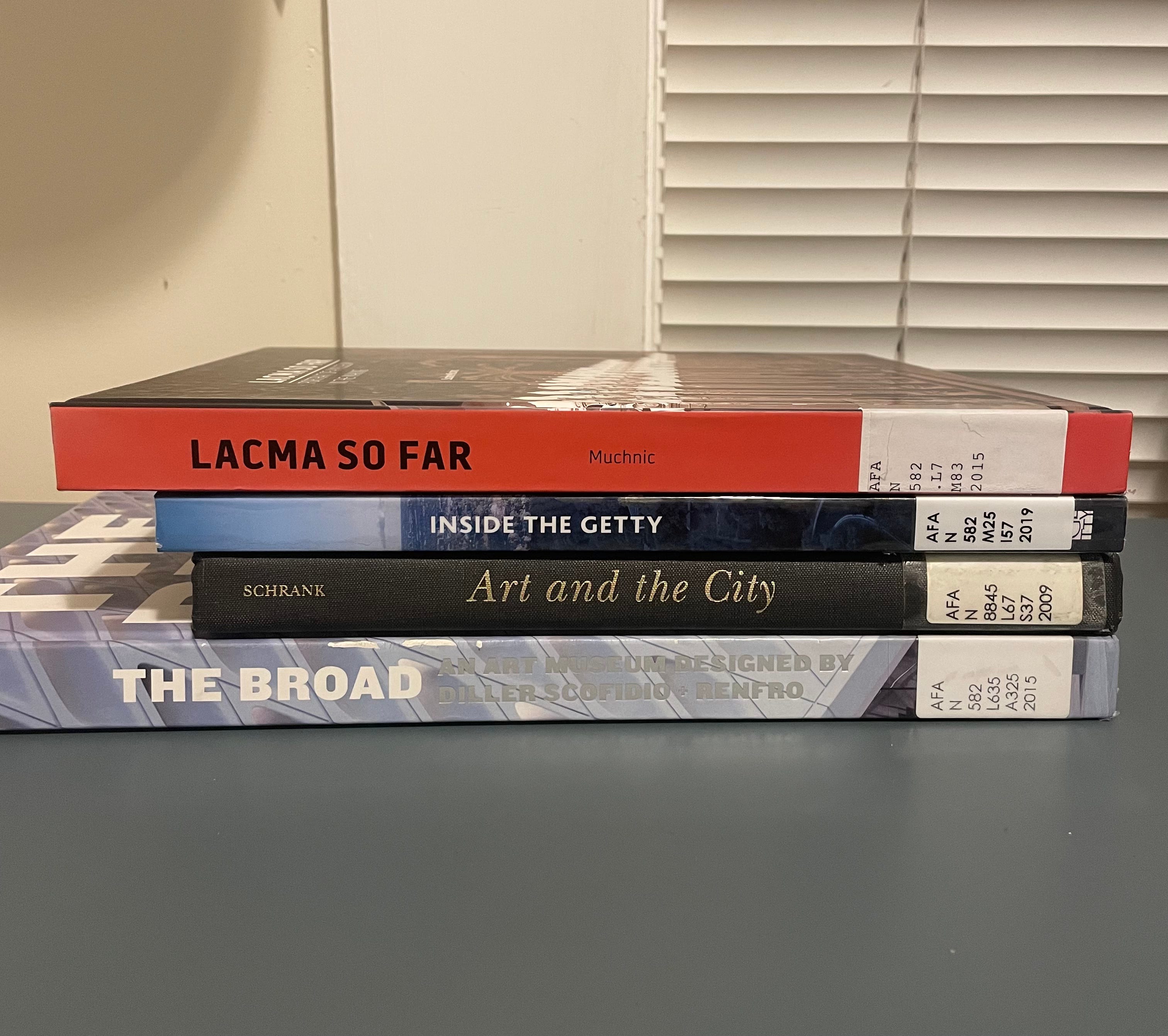
As I began working on constructing this annotated bibliography, I only had loose threads of ideas and a barren loom on which I was to fashion my next writing project. For whatever reason, John Berger’s monumental video series Ways of Seeing from the BBC had recently floated back into my memory — a recollection of a formative piece of media that introduced me to the world of art criticism. Perhaps less accidentally, I also had several of Los Angeles’ art museums on my mind (a result less of phenomenological accident, and more of my habitual pilgrimages to one the city’s great art institutions on the weekends). I knew I wanted to merge these two items of thought; I wanted to see what John Berger would have to say about Southern California’s iconic centers for art appreciation — or if you lean more cynically, for art neglect. But I didn’t have much else beyond that.
With so little in hand, I plunged into the seemingly infinite depths of critical literature relating to art interpretation. The vastness of the scholarship is beyond intimidating: the sheer quantity of texts relating to art theory (or philosophy, or aesthetics, or…) has a dizzyingly disorienting effect, and if you don’t have a foothold, you can easily spin into the abyss of confusion or frustration. Fortunately, Berger provided a nice starting point for this project, allowing me to hone in on unseen external forces at play that condition our engagement with art. In particular, his last two essays from Ways of Seeing seemed salient, both focusing on economic factors in the art world.
This point of origination gave me the focus to find literature relating to art and money. There would seem to exist no gaps in the ambit of writing about art, but nowhere is this clearer than in considerations of art and its relation to economics. Just like Berger, a great many art writers fall under the broad category of Marxist criticism (if “Marxism” and “art criticism” aren’t already tautological). From Walter Benjamin to Fredric Jameson to Mark C. Taylor, related thinkers weren’t hard to find — and all these thinkers had much to bear on the state of the art museum today. Gradually, I began to construct the idea of using Marxist art scholarship to analyze the dynamics of museums today.
This economic orientation toward my approach to museums feels particularly appropriate for Los Angeles, where art and economics are completely intertwined. In this city, the art scene often feels entirely dominated by financial concerns. Many reasons suggest themselves for this phenomenon (several of which I learned in the course of accumulating sources) — the influence of the film industry, the rampancy of materialism, or the individualistic culture, to name a few. But perhaps the most significant element behind this reality exists in the concentration of massive wealths among several billionaire collectors. Among these figures, I counted J. Paul Getty, Norton Simon, and Eli Broad. (Hmm, I feel like I’ve seen those names before.)
Thus, in my unleashing of Berger and company on the Los Angeles art world, I came to realize the enormous influence of billionaires on the scene here. From here, I decided to make an investigative inquiry into the nature of these billionaires’ art museums, and the theoretical/philosophical underpinnings behind them. Why are they designed so peculiarly? (I note that each of these three billionaire museums, as I will (dis)affectionately refer to them, have a distinctive style in the architectural design itself.) How do the galleries contribute to viewers’ interaction with the collections? How are these museums acting to the personal benefit of the wealthy families behind them? I found that in the linking of these two interests of mine, a series of questions began to easily unfurl, presenting a plentiful quarry to mine as I continued to meditate on art museums in Los Angeles.
Still, I didn’t feel that my schematization for the project was quite grounded enough. Highly abstract and theoretical, these questions would smack of idle philosophizing if I didn’t tie the project down to a few specific points of example. Further, I risked losing the focus of the project without any concrete touchstones to evaluate my ideation — potentiating a ranty tirade against billionaires and their perverse effects on the art world. (There’s a very valuable place for that, but I leave it to those writers with greater rhetorical talent than my own… the task is too important to be done half-heartedly.)
To sidestep this possible stumbling block, I identified three pieces of art to evaluate, one from each billionaire museum. From the Getty, Manet’s Jeanne; from the Broad, Lichtenstein’s I… I’M SORRY!; from the Norton Simon, Allegory of Virtue and Nobility. Each of these pieces features as a highlight for their respective collections, and each centers around portrayals of women (allowing me to conduct an exposé on the billionaires and their prized mistresses, as it were). To consider the theoretical implications of my collection of sources, I planned to center their insights on the situations of these three paintings, considering how the museum and its environment actively shapes audience interpretation of the works. This grounding would allow me to write my ensuing project with greater clarity and tactility, tethering all my thoughts to visualizable examples.
So, for the next several weekends, I have some appointments to keep — with Jeanne, and with Eve, and with Virtue and Nobility. When I visit them in the confines of their luxurious abodes, I plan to take a notebook with me and jot down my “ways of seeing” in light of the museums’ contexts. From there, I will write a triptych of sorts, evaluating how my engagement with these paintings has changed in accordance with a more economically-concerned approach. I’m sure my audience — those museum-goers who look carefully at a piece of art, labor slowly through the galleries, and don’t come just for the quick snapshot of a Monet or Picasso for Instagram — will eagerly await my findings. (I know it’s a small group, but they’re very attentive!)